Posts

Showing posts with the label Cormac McCarthy

Review: The Passenger by Cormac McCarthy

Image
  Let me start off by saying that I love Cormac McCarthy , and at the time of his death last summer I'd read all but his last two novels, ThePassenger and Stella Maris (which at the time were only available in hardback). I love his use of archaic, biblical and inventive language as well as the demands he puts on his readers—you don’t turn to McCarthy for an easy, straightforward read. His novels deal with complex themes (Love, Death, Violence, the nature of Good and Evil, and the nature of God), and you get the sense that McCarthy, himself, is grappling for understanding of both the world he has been cast into and the worlds he has created. The Passenge r is no different—in fact, in many ways, it is even more challenging for its lack of a traditional narrative structure: a beginning, a middle and an ending. On the surface, T he Passenger feels familiar. It feels like genre fiction . When Bobby Western and a fellow salvage diver investigate a small plane that has crashed in th...

Loree's Top Ten Books of the West

Image
Literature of the American West encompasses many things. Fiction, poetry, memoir, biography, travelogue and historical texts can all be found beneath its broad banner. Coming up with just ten titles, then, is a ridiculous exercise. There are so many other books I could have included. Books such as... Travels With Charley   was probably the first book to put 'the West' on my radar when I was just 11 or 12 years old was .  We'd probably been reading  Of  Mice and Men  or  The Red Pony  at school, and rather than turning me off of Steinbeck - as so often happens when books are studied at that age - it sparked a love which continues to this day. The book recounts the journey Steinbeck made around the perimeter of the United States in 1960, in the company of his standard poodle, Charley. It was probably the dog that first attracted me to the book, but it's the movement of the narrative which really sticks with me.  Travels  is not about the West a...

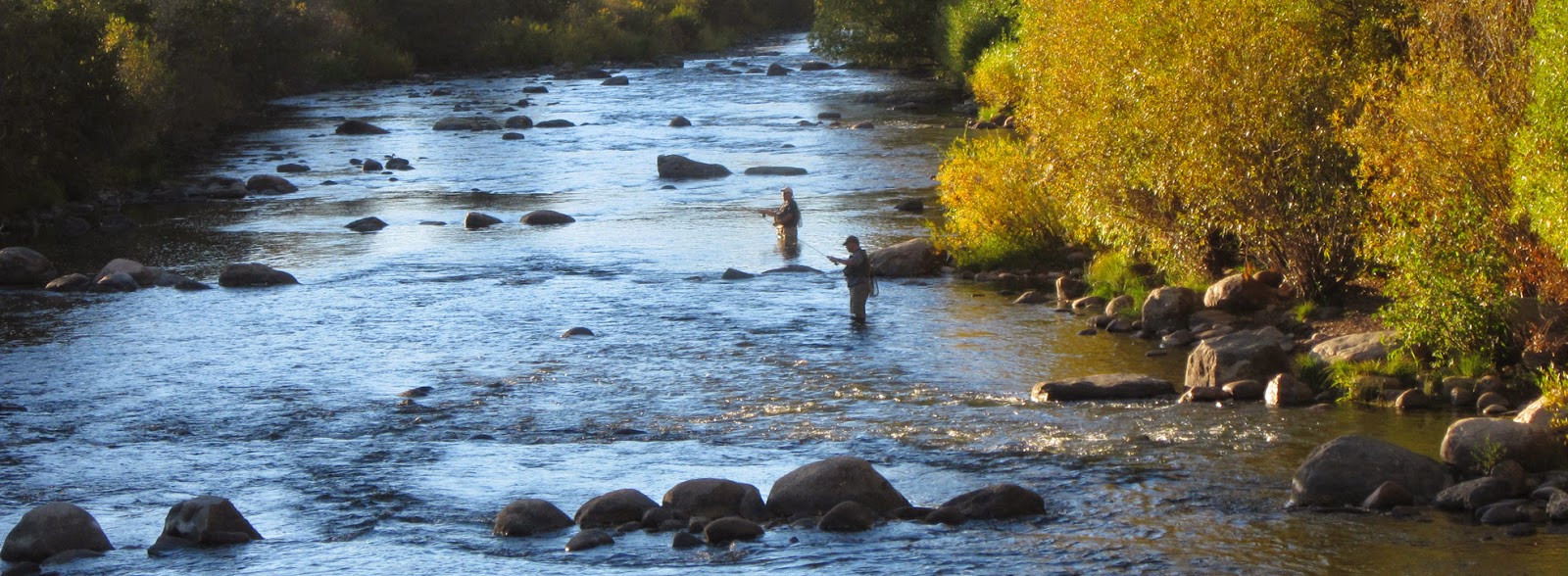
Fishing for Readers

Image
A number of months ago I read an article which was critical of the advice we often give to Creative Writing students in which we encourage them to begin their stories in the thick of action, or in medias res.  The argument goes that writers must capture the reader’s interest right at the beginning by ‘hooking them in’ so they feel compelled to continue reading.  Often this ‘hook’ is achieved through the creation of intrigue, something or someone which is obviously out of place or which otherwise encourages the reader to ask questions.  At other times it involves a piece of high drama and the reader is dropped straight into a piece of unfolding action.  At the same time that we encourage students to work on their hooks, we tend to shoo them away from using too much description at the beginning of a story.  Readers’ attention spans have shortened, we say, and if a writer doesn’t grab reader’s interest in the first couple of paragraphs – or in the case o...

New Visions of the Old West: Blood Meridian as a reflection of anxiety

Image
This section carries on from Perception, Character and Mood photo by Brian Lary During the 1970s and 1980s, the United States military took part in a series of engagements which many Americans found morally questionable [1] , shaking the previously firm belief that America was a force for good in the world.  The rise of the Red Power movement and its close associate, the American Indian Movement, and publication of books such as Vine Deloria’s Custer Died for Your Sins (1969) also encouraged the dominant American culture to question the treatment of the nation’s first inhabitants.  Growing environmental concerns, and Cold War anxieties added to the uncertainty which many Americans felt.  At the same time, American writers began to challenge received notions of Western American history, and the revised literary mythologies they created reflected the nation’s mood by offering new perceptions (Lewis, 2003) of a West without heroes.  Most notable of these anti-we...

Voices of the American West: Striving for Authenticity

Image
Introduction As part of my research project, I am writing a novel set in the American West, with historical and contemporary narratives. From the outset, I have had two major concerns: how to access an accurate and authentic historical voice; and how to represent a Native American character in a culturally authentic manner. This paper will provide a context for those questions and look at the ways in which I have addressed them in my research. The Importance of Authenticity in Western American Literature No other region-based literature, and certainly no other genre is as concerned with the issue of authenticity as is literature of the American West. Even historical fiction, the form most closely associated with representations of actual people and factual events is at ease with supposition and probability. Western fiction, however, is often seen to regard its subject as if it were a holy relic, to be revered and scrutinized, but not to be tampered with in any way. Since Owen Wis...

Review of Cormac McCarthy's The Road

As a punctuation pedant, it always takes me a while to get into the swing of Cormac McCarthy novels, but I'm always glad when I can remove my teacherly hat and get sucked into the story. I found this one very moving, probably in part due to its stark simplicity. The relationship between the man and his son is beautifully portrayed and utterly tender. McCarthy is not a one-trick-pony; all of his books are different - always dark, but still always different. Which is possibly why the punctuation thing nags at me. I'm not sure why he's chosen to write this way. Yes, it represents a kind of bleakness, which he's famous for, but still it seems unnecessary. He does not need a gimmick like this to set himself apart from other writers. His stories do that for him. And it makes it really difficult to insist that my students use correct punctuation...

Review of Cormac McCarthy's Outer Dark

Published in 1968, Outer Dark , is McCarthy's second novel. The black and pessimistic view of human nature, McCarthy's trademark, is there, and themes which emerge in later books are touched upon. There are, however, some fairly rudimentary issues which kept me from being fully engaged with this book. For some reason McCarthy likes his characters to be as anonymous as possible, seldom referring to them by name. This, and the fact that he does not give us much in the way of physical description, made it very hard for me to picture Rinthy and Culla Holme and to care about them as people. Sure, we know that they live in the bleakest of circumstances (that’s pretty much a given for McCarthy’s characters) and that they are impoverished on all levels, but it is not until nearly half-way through the book that we learn the age of Rinthy. This matters. I do not necessarily need to know that Rinthy is nineteen years old, but it would have helped tremendously when trying to form an image ...

Review of Cormac McCarthy's Blood Meridian

As can be said of all Cormac McCarthy novels, Blood Meridian is not for the faint-hearted. At its centre is 'the kid', a fourteen-year-old boy, sucked into a mercenary band of scalp hunters who rove the south-west frontier of 1849. As they drift from one bloody massacre to another, a hellish world unfolds. There is little plot in this novel - the action is, for the most part episodic - and the omniscient narrator remains detached to the point that we never get inside the heads of the characters. This makes them feel two-dimensional and cliché in their bloodlust and I know that I've seen them all before – the psychotic murderers, the crooked lawmen, the Indian accomplices dressed in ill-fitting morning coats – and because of the narrative distance, I learn nothing new about any of them. The narrator also has an amoral and objective tone: we are never asked to make judgments about or join in the depravity, but merely to be a witness. We do, however, get the sense early on th...